
Top

Crevillente (Alicante)

Travelling the network

Crevillente (Alicante)

BACKGROUND

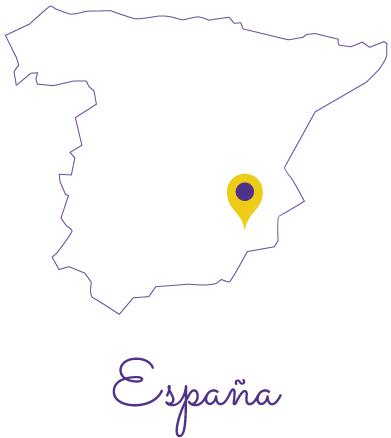
Crevillente is a town with a population of about 30,000 people located in the southern part of the province of Alicante (Spain), in the Baix Vinalopó region. It is strategically located at the foot of the Crevillente mountain range, in a dry Mediterranean climate characterized by carob, almond, and olive groves. One of its hallmarks is the carpet manufacturing industry.

Its origins can be traced back to the Upper Paleolithic period, some 30,000 years ago. The Late Bronze Age and Early Iron Age are noteworthy, during this period, the settlement of La Penya Negra stands out as a key site for understanding Iberian culture.

During the Roman period, there were many villas located on the flat part of the municipal area. However, the origins of the town center are undoubtedly Islamic, taking the name Qirbilyân, as Crevillente was known in Arabic.

It was conquered by the Christians in 1243. Until 1318, power was held by a chieftain or ra’ís.
Its history during these centuries up to the Catholic Monarchs, first under Castilian rule, and from 1296 under the Crown of Aragon, is characterized by its location on the border between the Nasrid Kingdom of Granada and Castile and, above all, by its predominantly Muslim population. Muhammad al-Shafra al-Qirbiliani was a doctor from Crevillente during this period whose reputation took him to the courts of Granada, Fez, and Morocco.

Crevillente grew gradually under the control of the Duke of Maqueda, a Spanish noble title created by Charles I in 1529, relying on very poor dryland farming complemented by esparto grass work. They searched for water for their lands deep within the mountains by drilling wells. Following the expulsion of the Moriscos in 1609, the population fell to one-third of its former size, falling into a crisis from which it did not recover until well into the 18th century. In the same century, it was granted the title of town for its loyalty to the Bourbon cause during the War of Succession.

The historical developments of the 19th and 20th centuries, and its situation today, have their origins in the evolution of the long-standing traditional craft of esparto and rush weaving toward a thriving carpet industry that serves as the driving force behind Crevillente’s socioeconomic life.

WHAT TO SEE

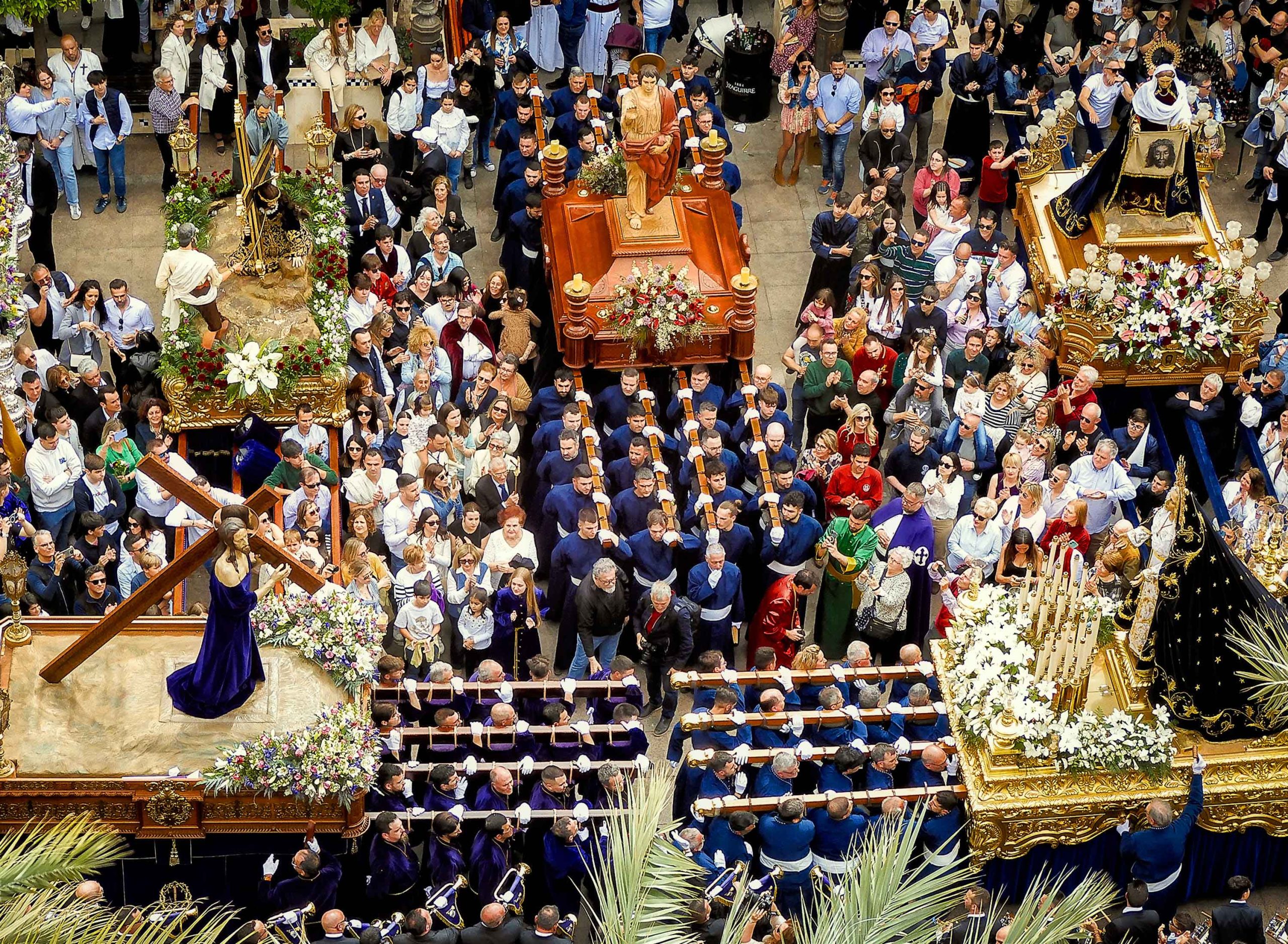
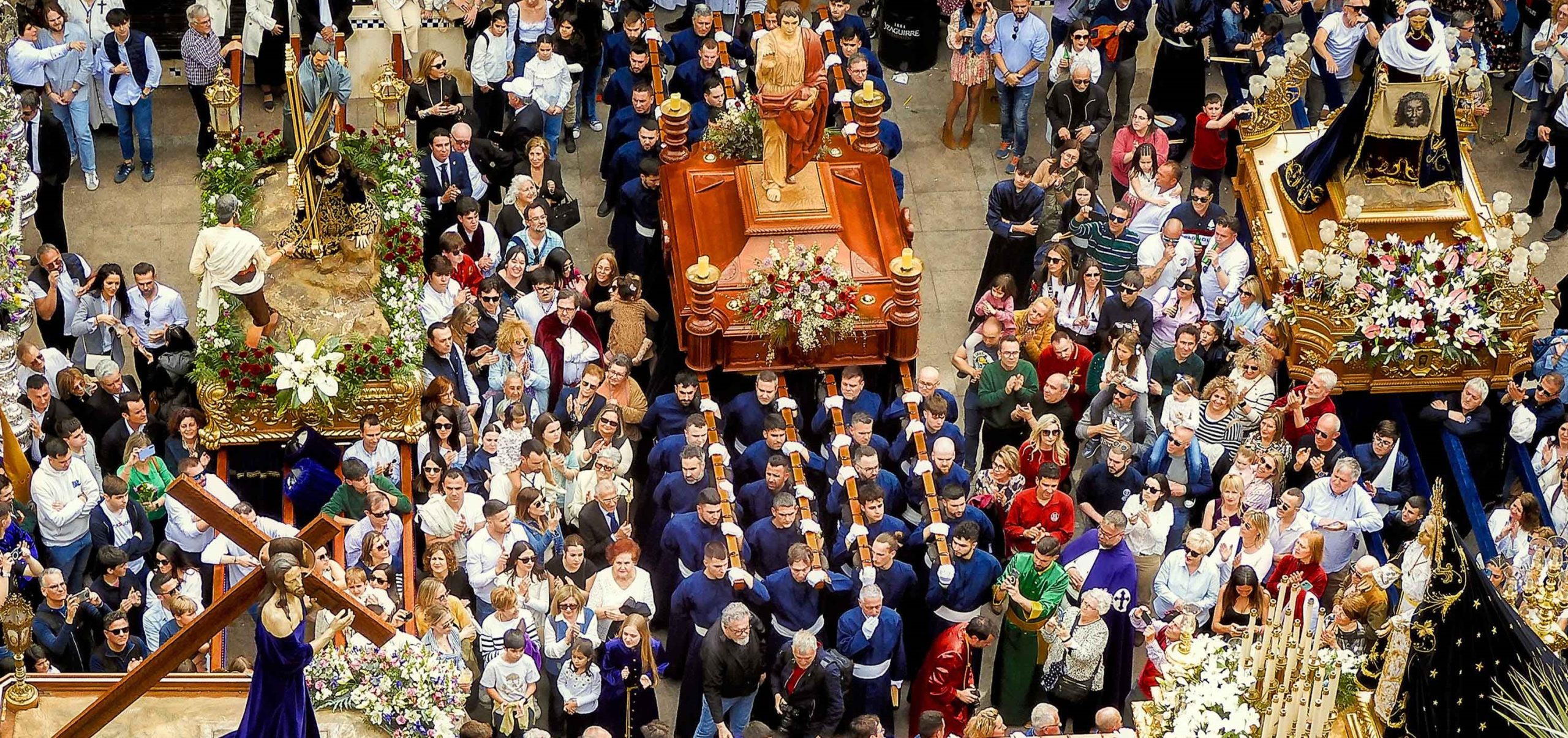
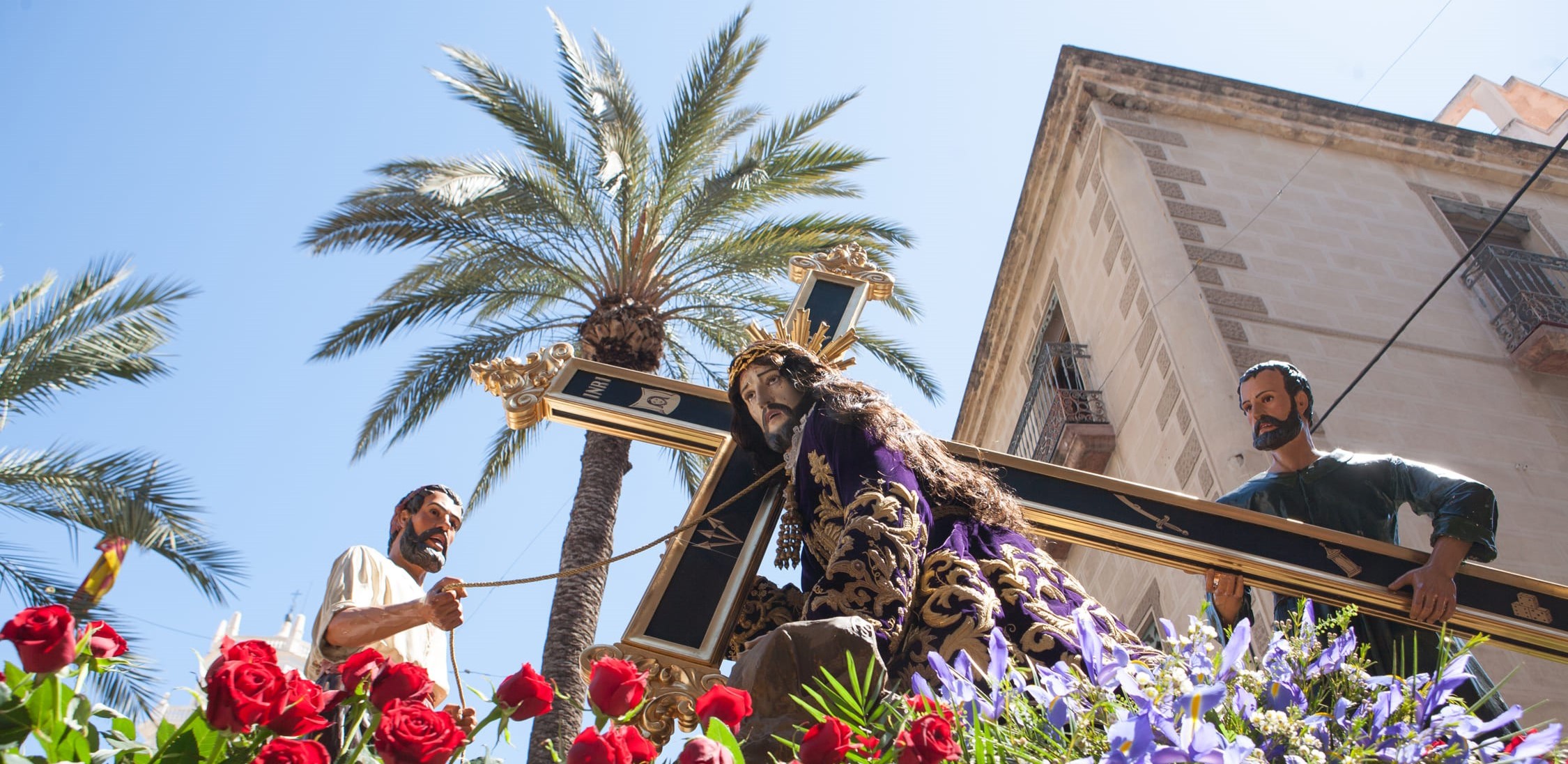
One of the town’s main tourist attractions is Crevillente’s Holy Week Museum. The building opened in 2005 and is a true benchmark among museums of its kind. Its unique architecture, characterized by a spatial layout divided into four levels – with an open central space and balconies surrounding each exhibition floor–, allows visitors to admire the floats from different perspectives.

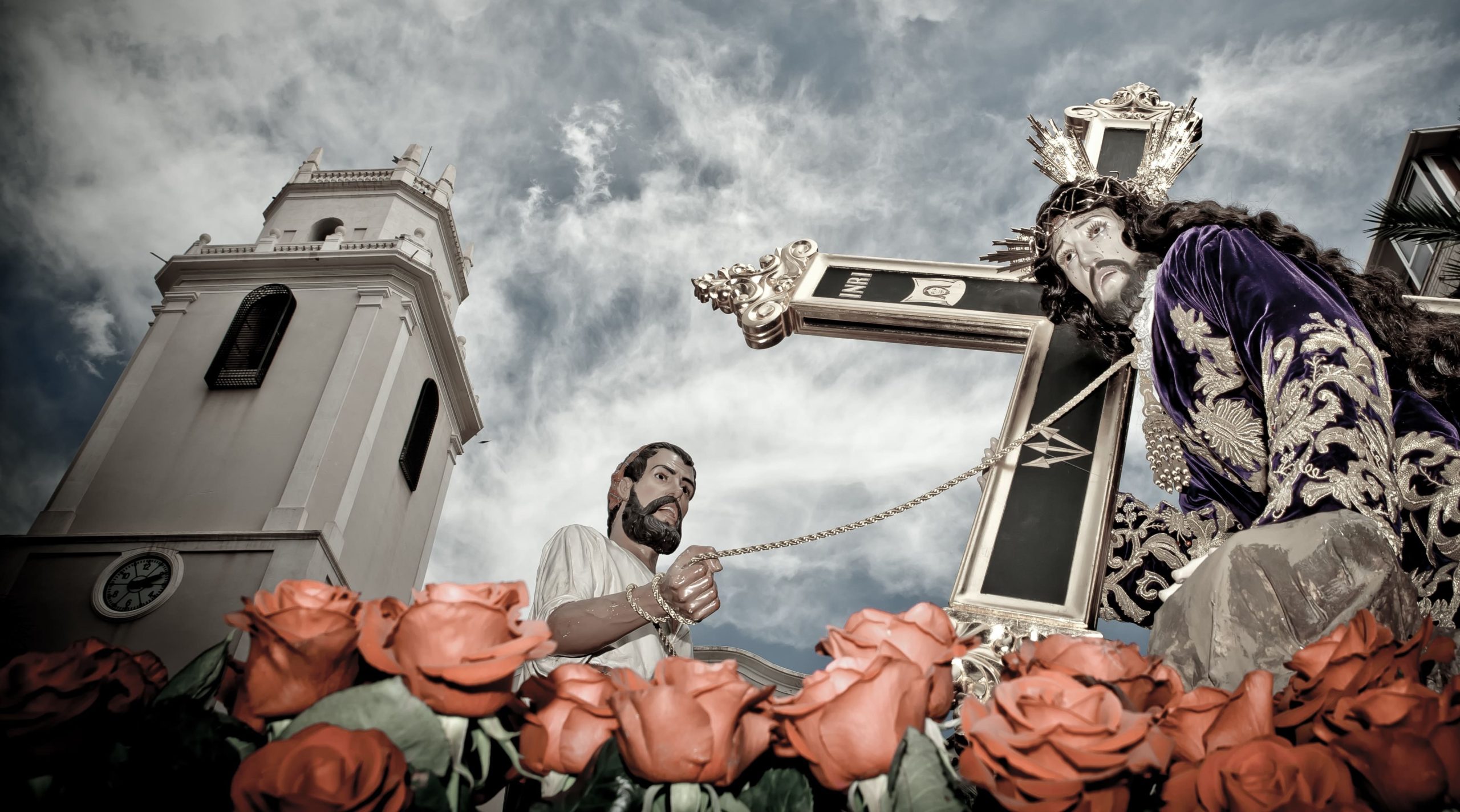
It houses 25 of the images or sculptural groups carried during Crevillente’s Holy Week processions, which are chronologically arranged across its four exhibition floors. They are works by artists of the caliber of Mariano Benlliure, Antonio Riudavets, García Talens, Antonio Parera, and Carmelo Vicent, among others.

In addition to the religious images, visitors can also admire various artistic elements related to Holy Week: embroidery, metalwork, signage, or religious paintings.

Other must-see places in Crevillente are:

  • Mariano Benlliure Museum: The museum originates from the connection between the Magro family, the artist, and Holy Week in Crevillente, and it currently houses the most significant collection of works by the sculptor from Valencia.
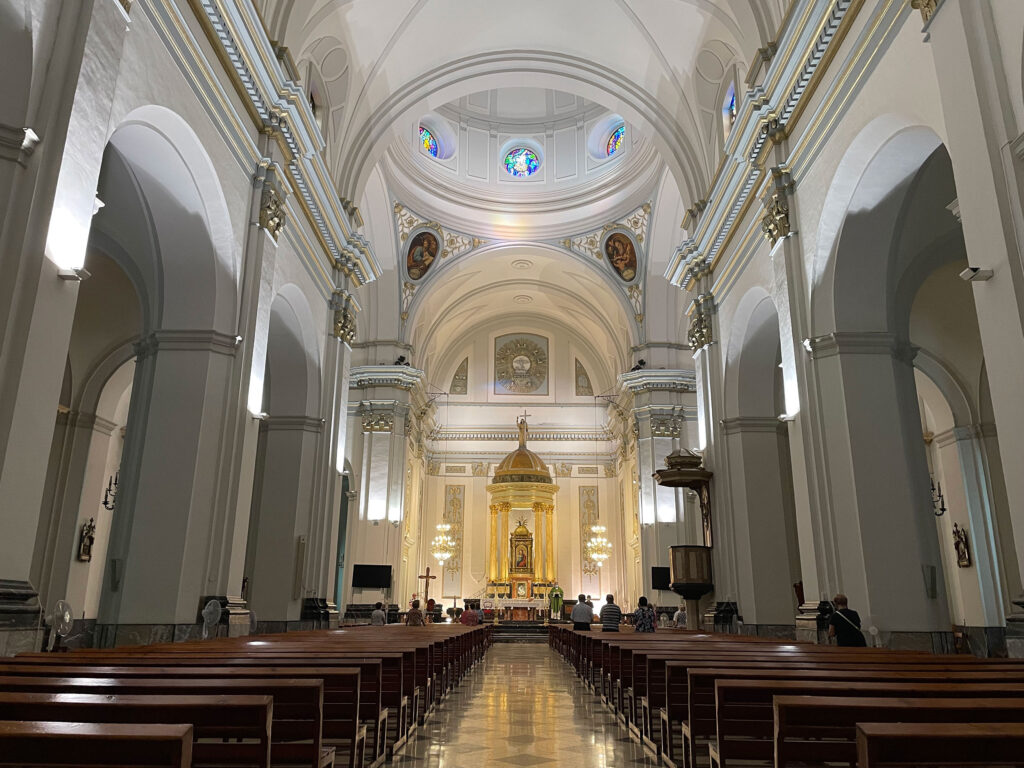
  • Parish of Our Lady of Bethlehem (Parroquia de Nuestra Señora de Belén): Construction began in 1772 under the direction of master builder Miguel Francia, and it was consecrated in 1828. It plays a key role in the festivities of Holy Week in Crevillente, since it houses for public veneration some of the statues carried in processions, such as The Three Marys and Saint John, Our Lady of Sorrows, and Our Father Jesus of Nazareth; all works by Mariano Benlliure.
  • Paseo del Calvario: Located in the western part of town, it is an iconic site of Crevillente’s Holy Week, since, just as in centuries past, the procession depicting scenes from the Passion of Christ concludes here on Good Friday morning.
  • Pintor Julio Quesada Museum: Located at the headquarters of the San Francisco de Asís Electric Cooperative, features the work of Julio Quesada Guilabert, an adopted son of Crevillente and one of the great watercolorists of the 20th century, alongside the winning works of the international competition established in his honor.

Other highlights include:

  • Among its natural attractions, the Crevillente mountain range and El Hondo Natural Park stand out.
  • Other traditions, such as the “Moors and Christians” Festival. Along with Holy Week, it is the town’s main celebration and holds the title of Festival of International Tourist Interest.

HOLY WEEK AND EASTER

Although there are no exact records of the origins of Holy Week in Crevillente, it can be said that the first religious brotherhoods were already established following the expulsion of the Moriscos, including the Virgin of the Dawn and the Stewardship of the Blessed Sacrament (during the first quarter of the 17th century).

However, the most decisive factor in its development was the donation of the hill known then as Camposanto by the Duke of Arcos, lord of the town, in 1753, for the construction of the Stations of the Cross and the celebration of the Meeting of Our Lady of Sorrows and the Holy Christ processions.

After several years of work in which the entire community participated, the culmination of the Stations of the Cross took place on February 5, 1768, a milestone in the history of Holy Week in Crevillente.

It was during the second half of the 19th century that it experienced its first great period of prosperity, with the incorporation of numerous images of religious processions, mainly by artists such as Antonio Riudavets and Francisco Pérez Figueroa, as well as the consolidation of guilds or family-based associations. A new period of revitalization began following the Spanish Civil War, with the emergence of works by sculptors such as Mariano Benlliure y Gil, García Talens, Carmelo Vicent, and Antonio Parera.

Mariano Benlliure y Gil, who sculpted eight of Crevillente’s images and processional groups, made of this town the one in Spain with the largest number of works created by the artist considered as the greatest Spanish sculptor of the 20th century.

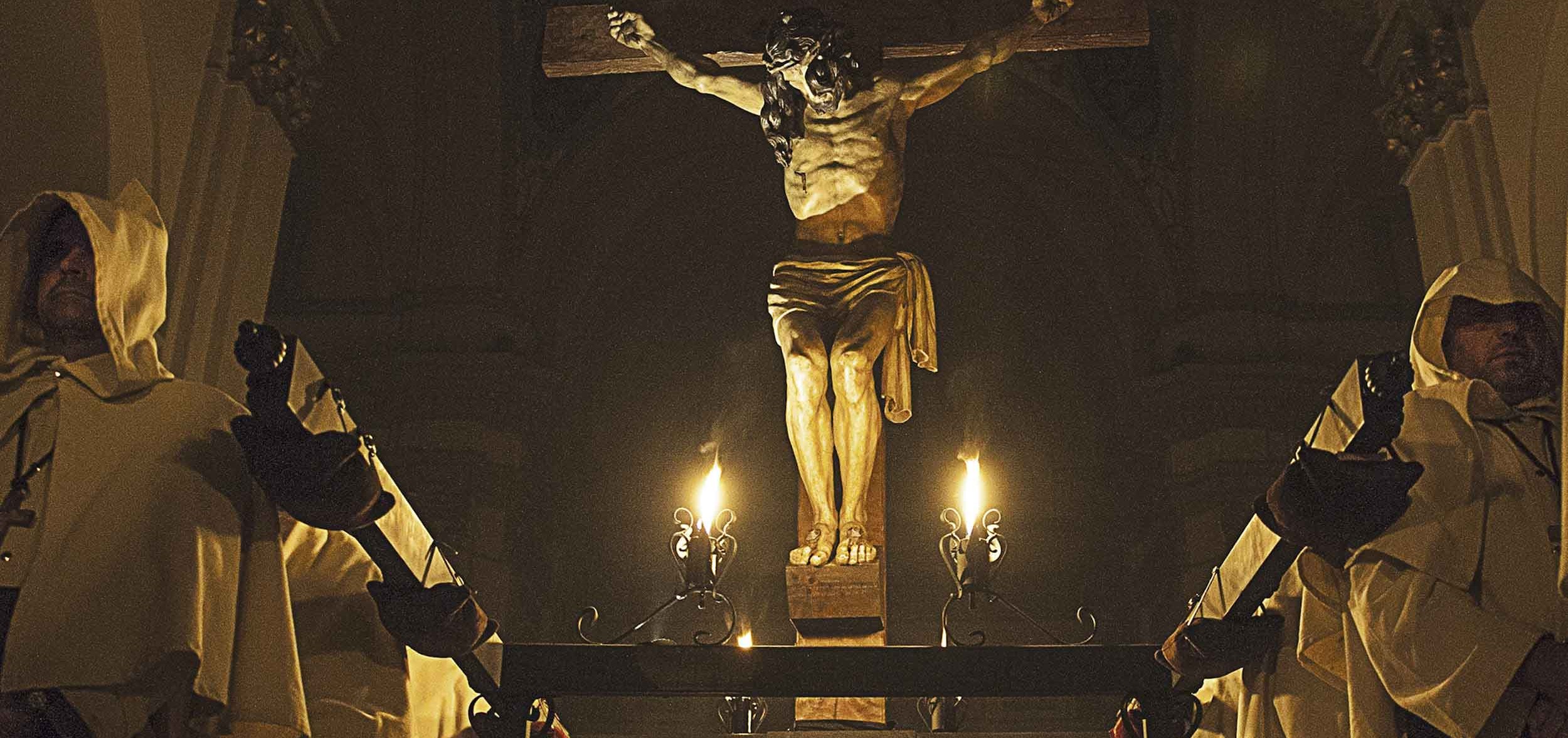
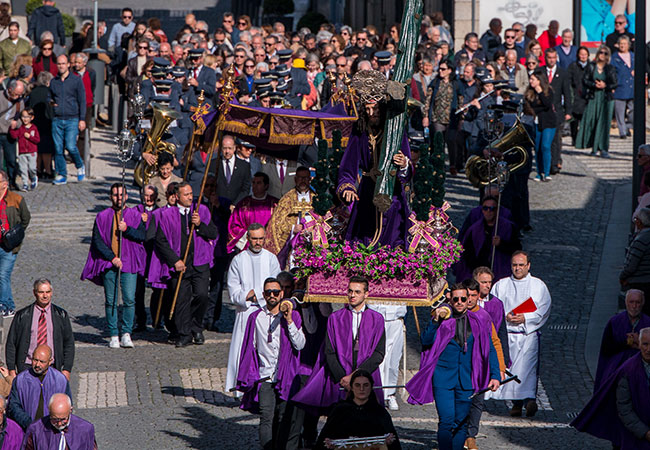
One of the main features of Holy Week in Crevillente is its strict adherence to the chronological order, which allows one to reflect in an orderly manner on the Passion, Death, Burial, and Resurrection of Christ.

A strong family connection is another of its defining characteristics, since many of the images were acquired by local families or organizations. This tradition is carried on in the customary “preparation of the floats,” a time before the processions when families clean, prepare, and decorate the floats.

Music is another of its defining features, since it provides a unique polyphonic quality to the celebration. During the processions, local choirs perform sacred motets created by classical composers such as Palestrina and by local composers, and turn the marches into a true outdoor choral concert. There are also the traditional bugle and drum bands, that set the pace of the procession, carried on the shoulders by the “els agarraors,” as they are called in Crevillente.

Traditional cuisine is also part of the experience, especially on Good Friday with the “Almuerzo del pa torrat”, a culinary tradition consisting of toast with oil and salt, served with cod, garlic, broad beans, and traditional flatbreads (cocas), such as the one with anchovies and onions, in keeping with the tradition of abstaining from meat.

GALLERY

LUGARES EN LA RED

Serbia

1 destinations

Portugal

5 destinations

Spain

14 destinations

Italy

3 destinations

Malta

13 destinations

0