
Top

Gudja

Travelling the network

GUDJA

BACKGROUND

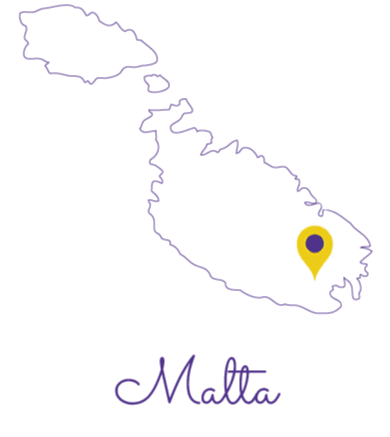
Gudja is a village in Malta’s Southern Region, situated on elevated ground south of Valletta, with a population of about 3,100. The area has been inhabited since prehistoric times, with remains from the Punic, Roman, Arab, and medieval periods, including the Ħal Resqun Catacombs. Today, Gudja is notable for its concentration of churches and historic buildings such as Palazzo Dorell, many of which are protected as cultural heritage sites.

Gudja refers to land situated on elevated ground, though not a hill, with roughly circular boundaries. Its coat of arms carries the Latin motto “pluribus parens”, meaning “mother of many children.” These “children” are the localities of Safi, Kirkop, Ħal Farruġ, Luqa, Mqabba, Birżebbuġa, and Tarxien, which were once part of Gudja’s parish church. From Tarxien, three additional parishes later developed, eventually giving rise to another parish: Our Lady of Lourdes in Paola.
WHAT TO SEE

The parish of il‑Gudja traces its origins to 1436, when Bishop Senatore de Mello declared Bir Miftuħ a parish church. The chapel of Bir Miftuħ—literally meaning “open well”—still stands on the outskirts of il‑Gudja, bearing witness to the village’s beginnings. Over the centuries, at least seven other villages emerged from il‑Gudja, earning it the Latin title Pluribus Parens, “mother of many children.”

Dominating the heart of the village is the parish church, completed in 1666 to a design by architect Thomas Dingli. In 1858, William Baker added a belfry, and at the start of the 20th century a new façade with two Baroque belfries was constructed. Together, these elements make the church of il‑Gudja a distinctive jewel of Maltese architecture.

Strolling through il‑Gudja, one is immediately struck by the many landmarks that reflect the village’s rich history. Among them are the tower of Tax‑Xlejli, built during the rule of the Order of Saint John within the grounds of Palazzo d’Aurel; a charming garden dating from the British period, now privately owned; and an inscription on a house façade dating back to 1533. The village streets are lined with limestone‑carved balconies, while the main square features statues of Saint Joseph and the Assumption. Several chapels also showcase treasures of silver and gold, both old and modern.

Each year on 15 August, il‑Gudja celebrates its annual Festa, when the parish church and the village are beautifully decorated. This feast offers locals, visitors, and tourists alike a vibrant display of Maltese religious folklore, making it one of the most memorable events of the year.

HOLY WEEK AND EASTER

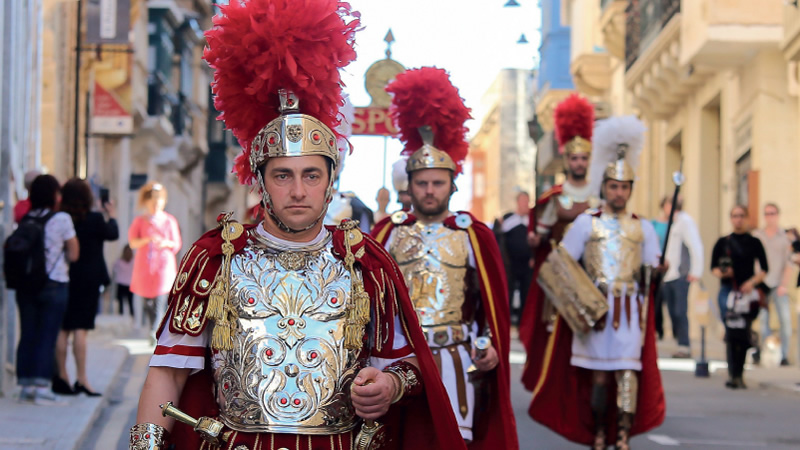
Gudja celebrates Holy Week with a distinctive blend of solemn liturgy, local customs, and national traditions. The observances begin with the procession of Our Lady of Sorrows on the Friday before Palm Sunday, a moving event where the statue of the Virgin is carried through the streets in an atmosphere of prayer and reflection. Central to the week are the services at the Parish Church of the Assumption of Our Lady, including the Holy Thursday Mass, the Good Friday Passion of the Lord, and the Easter Vigil. The community also takes part in the Maltese tradition of the Seven Visits (Is-Seba’ Visti) on Holy Thursday, visiting seven churches in devotion. While Gudja is not known for large-scale processions beyond Our Lady of Sorrows, its people uphold the local custom of baking Qagħaq tal-Appostli, a ring-shaped bread topped with almonds and sesame seeds, enjoyed especially on Holy Thursday and Good Friday. Together, these practices create an atmosphere of quiet devotion and shared faith, reflecting the essence of Malta’s Holy Week traditions.

LUGARES EN LA RED

Serbia

1 destinations

Portugal

5 destinations

Spain

13 destinations

Italy

3 destinations

Malta

13 destinations

Slovenia

1 destinations

0